
Introduction
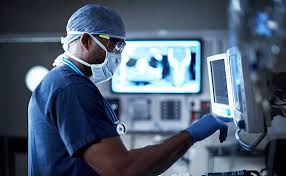
Diagnostic laboratories play a critical role in modern healthcare by identifying diseases, monitoring patient health, and guiding medical treatment. Over the past two decades, diagnostic science has advanced rapidly due to the development of new laboratory instruments that are faster, more accurate, and increasingly automated. Traditional diagnostic tools, while effective, often required long processing times, large sample volumes, and significant manual labor. In contrast, modern diagnostic instruments integrate digital technology, molecular biology, automation, and artificial intelligence to improve efficiency and reliability Diagnostic Science.
The introduction of advanced laboratory instruments has transformed diagnostics in areas such as infectious disease detection, cancer screening, genetic testing, and point-of-care analysis. These instruments not only improve patient outcomes but also reduce laboratory workload and healthcare costs. This post explores some of the most important new laboratory instruments used in diagnostics, their working principles, applications, advantages, and future potential.
Evolution of Diagnostic Laboratory Instruments
Historically, diagnostic laboratories relied on manual techniques such as microscopy, culture methods, and basic biochemical assays. While these methods are still valuable, they are time-consuming and prone to human error. The rise of molecular biology and digital technologies led to the development of instruments capable of detecting diseases at the genetic and molecular level.
Modern diagnostic instruments emphasize:
- High sensitivity and specificity
- Rapid turnaround time
- Automation and minimal human intervention
- Small sample volume requirements
- Digital data storage and analysis
These improvements allow laboratories to handle larger workloads while maintaining high accuracy.
Real-Time Polymerase Chain Reaction (RT-PCR) Systems
One of the most significant advancements in diagnostic laboratories is the real-time polymerase chain reaction (RT-PCR) system. RT-PCR is a molecular technique used to amplify and detect specific DNA or RNA sequences. Unlike traditional PCR, real-time PCR allows scientists to observe the amplification process as it occurs.
Working Principle
RT-PCR works by repeatedly heating and cooling a sample to amplify genetic material. Fluorescent markers are added to the sample, and the instrument measures fluorescence intensity during each cycle. The amount of fluorescence corresponds to the quantity of target genetic material present.
Diagnostic Applications
- Detection of viral infections (e.g., influenza, COVID-19)
- Identification of bacterial pathogens
- Genetic disorder screening
- Cancer biomarker detection and Diagnostic Science
Advantages
- Extremely high sensitivity
- Rapid results (often within hours)
- Ability to quantify viral or bacterial load
RT-PCR systems have become a gold standard in diagnostic laboratories worldwide.
Next-Generation Sequencing (NGS) Platforms
Next-generation sequencing (NGS) instruments represent a major breakthrough in diagnostic science. These platforms allow the sequencing of millions of DNA fragments simultaneously, providing detailed genetic information in a short time.
Working Principle
NGS instruments fragment DNA, attach adapters, and sequence multiple fragments in parallel. Advanced software then assembles the sequences and analyzes genetic variations.
Diagnostic Applications
- Detection of inherited genetic disorders
- Cancer genomics and personalized medicine
- Identification of rare mutations
- Pathogen genome sequencing
Advantages
Comprehensive genetic analysis
High throughput
Supports personalized treatment plans
Although NGS instruments are expensive, their diagnostic value is immense, especially in oncology and genetic medicine.
Automated Hematology Analyzers
Automated hematology analyzers are modern instruments used to analyze blood samples quickly and accurately. These devices have replaced many manual blood cell counting methods.
Working Principle
Hematology analyzers use techniques such as electrical impedance, laser light scattering, and flow cytometry to count and classify blood cells.
Diagnostic Applications
- Complete blood count (CBC)
- Detection of anemia, leukemia, and infections
- Monitoring of chronic diseases
Advantages
High speed and accuracy
Reduced human error
Ability to process large numbers of samples
These instruments are essential in hospitals and diagnostic laboratories for routine and emergency testing.
Digital Pathology and Automated Microscopy
Digital pathology systems combine high-resolution scanners with advanced imaging software. Instead of examining physical slides under a microscope, pathologists can view and analyze digital images Diagnostic Science.
Working Principle
Glass slides are scanned using automated slide scanners, creating detailed digital images. Image analysis software and artificial intelligence (AI) assist in identifying abnormalities.
Diagnostic Applications
- Cancer diagnosis
- Tissue analysis
- Remote pathology consultations
Advantages
Improved image quality
Remote access and collaboration
AI-assisted diagnosis improves accuracy
Digital pathology enhances efficiency and allows expert consultation across different locations.
Point-of-Care Testing (POCT) Devices
Point-of-care testing devices are designed to perform diagnostic tests near the patient rather than in a central laboratory. These compact instruments are increasingly used in clinics, ambulances, and rural healthcare settings.
Working Principle
POCT devices use miniaturized sensors and cartridges to analyze blood, urine, or saliva samples. Results are displayed digitally within minutes.
Diagnostic Applications
- Blood glucose monitoring
- Cardiac marker testing
- Infectious disease screening
Advantages
- Rapid results
- Minimal training required
- Improved patient management
POCT devices are particularly valuable in emergency and remote healthcare environments.
Mass Spectrometry in Diagnostics
Mass spectrometry (MS) is an advanced analytical technique that identifies molecules based on their mass-to-charge ratio. Recent improvements have made MS more suitable for routine diagnostic use.
Working Principle
Samples are ionized, and the ions are separated based on mass. The resulting spectrum helps identify and quantify molecules.
Diagnostic Applications
- Detection of metabolic disorders
- Drug monitoring
- Identification of microorganisms
Advantages
High precision
Ability to analyze complex samples
Broad diagnostic capability
Mass spectrometry is especially useful in specialized diagnostic laboratories.
Artificial Intelligence-Integrated Diagnostic Instruments
Artificial intelligence is increasingly being integrated into diagnostic instruments. AI algorithms analyze large datasets, identify patterns, and assist in decision-making.
Applications
Image analysis in radiology and pathology
Predictive diagnostics
Automated result interpretation
Benefits
Reduced diagnostic errors
Faster analysis
Support for healthcare professionals
AI does not replace laboratory experts but enhances their accuracy and efficiency.
Challenges and Limitations
Despite their advantages, new diagnostic instruments face several challenges:
- High initial cost
- Need for skilled personnel
- Data security and privacy concerns
- Maintenance and calibration requirements
Addressing these challenges is essential for widespread adoption, especially in low-resource settings.
Future Trends in Diagnostic Laboratory Instruments
The future of diagnostic science is focused on:
Miniaturization of instruments
Greater use of AI and machine learning
Integration of cloud-based data systems
Personalized and predictive diagnostics
Emerging technologies such as lab-on-a-chip devices and wearable diagnostic sensors may further revolutionize healthcare.
Conclusion
New laboratory instruments have transformed diagnostic science by improving accuracy, speed, and efficiency. Technologies such as RT-PCR systems, next-generation sequencing platforms, automated analyzers, digital pathology, and AI-integrated devices are redefining how diseases are detected and managed. These instruments play a vital role in early diagnosis, personalized treatment, and improved patient outcomes.
As technology continues to advance, diagnostic laboratories will become more automated, connected, and intelligent. While challenges remain, continued research and innovation will ensure that modern diagnostic instruments remain at the forefront of healthcare, supporting better medical decisions and saving lives.












Leave a Reply