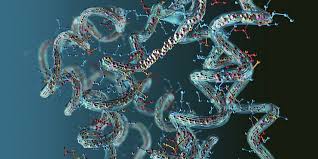
Enzymes are one of the most important components of living organisms. They are biological catalysts that speed up chemical reactions necessary for life. Without enzymes, most biochemical reactions would occur too slowly to sustain life. Every process in the body—from digestion and respiration to DNA replication and muscle contraction—depends on enzymes. For this reason, enzymes are often described as the “engines of life.”
This essay explores what enzymes are, their structure and properties, how they work, the factors that affect their activity, different types of enzymes, and their importance in living organisms and everyday life.
What Are Enzymes?
Enzymes are specialized proteins that increase the rate of chemical reactions without being consumed in the process. In living cells, thousands of chemical reactions occur simultaneously, and enzymes ensure that these reactions happen quickly and efficiently under normal body conditions such as temperature and pH.
Most enzymes are proteins, although some RNA molecules called ribozymes can also act as enzymes. Each enzyme is highly specific, meaning it usually catalyzes only one type of reaction or works on a specific substance known as the substrate.
Nature and Composition of Enzymes
Enzymes are primarily composed of long chains of amino acids linked together by peptide bonds. The sequence of amino acids determines the enzyme’s three-dimensional structure, which is crucial for its function.
Many enzymes consist of two parts:
- Apoenzyme – the protein portion
- Cofactor – a non-protein component required for activity
Cofactors may be:
- Metal ions (such as iron, magnesium, or zinc)
- Organic molecules called coenzymes (such as vitamins or vitamin derivatives)
When the apoenzyme and cofactor combine, they form a complete and active enzyme called a holoenzyme
Structure of Enzymes
The structure of an enzyme plays a key role in its function. Enzymes have four levels of structure:
- Primary structure – the sequence of amino acids
- Secondary structure – folding into alpha helices and beta sheets
- Tertiary structure – the three-dimensional shape
- Quaternary structure – association of multiple polypeptide chains (in some enzymes)
Within the enzyme structure is a specific region called the active site. This is where the substrate binds and the chemical reaction takes place. The shape and chemical properties of the active site are complementary to the substrate.
Mechanism of Enzyme Action
Enzymes work by forming a temporary complex with their substrate called the enzyme-substrate complex. This interaction lowers the activation energy required for the reaction, allowing it to proceed faster.
There are two main models that explain enzyme action:
1. Lock and Key Model
According to this model, the active site of the enzyme is rigid and exactly matches the shape of the substrate, similar to a key fitting into a lock. This model explains enzyme specificity but does not account for flexibility in enzyme structure.Within the enzyme structure is a specific region called the active site.
2. Induced Fit Model
This model suggests that the active site is flexible. When the substrate binds, the enzyme changes shape slightly to fit the substrate more tightly. This model is more widely accepted as it explains how enzymes stabilize the transition state of reactions.
Properties of Enzymes
Enzymes have several unique properties that distinguish them from other catalysts:
- Specificity: Each enzyme is specific to its substrate.
- Reusability: Enzymes are not consumed and can be used repeatedly.
- Efficiency: A single enzyme molecule can catalyze thousands of reactions per second.
- Sensitivity: Enzyme activity is affected by temperature, pH, and chemical conditions.
- Biological origin: Enzymes are produced by living cells.
Factors Affecting Enzyme Activity
Several factors influence how efficiently enzymes work:
1. Temperature
Enzymes have an optimum temperature at which they function best. For most human enzymes, this is around 37°C. At low temperatures, enzyme activity slows down. At very high temperatures, enzymes may denature, losing their shape and function.
2. pH
Each enzyme has an optimum pH. For example:
- Pepsin (in the stomach) works best in acidic conditions.
- Trypsin (in the intestine) works best in alkaline conditions.
Extreme pH levels can denature enzymes.
3. Substrate Concentration
As substrate concentration increases, enzyme activity increases until the active sites are saturated. Beyond this point, the rate remains constant.
4. Enzyme Concentration
Increasing enzyme concentration increases the rate of reaction, provided sufficient substrate is available.
5. Inhibitors
Inhibitors are substances that reduce enzyme activity. They may be:
- Competitive inhibitors: Compete with the substrate for the active site.
- Non-competitive inhibitors: Bind to a different site, altering enzyme shape.
Types of Enzymes
Based on their function, enzymes are classified into six major groups:
- Oxidoreductases – catalyze oxidation-reduction reactions
- Transferases – transfer functional groups between molecules
- Hydrolases – break bonds using water
- Lyases – break bonds without using water or ATP
- Isomerases – rearrange atoms within a molecule
- Ligases (Synthetases) – join two molecules using ATP
This classification helps scientists understand enzyme roles in metabolism.
Enzymes in Metabolism
Metabolism consists of all chemical reactions in the body and is divided into:
- Catabolism: breakdown of complex molecules to release energy
- Anabolism: synthesis of complex molecules using energy
Enzymes regulate both processes, ensuring that metabolic pathways proceed in a controlled and efficient manner. Each step in a metabolic pathway is catalyzed by a specific enzyme.
Role of Enzymes in Digestion
Digestive enzymes break down food into simple molecules that can be absorbed by the body:
Amylase: breaks down starch into sugars
Proteases: digest proteins into amino acids
Lipase: breaks down fats into fatty acids and glycerol
Without digestive enzymes, nutrients would not be available for growth, repair, and energy production.
Industrial and Medical Applications of Enzymes
Enzymes are widely used outside the body as well:
Medical Applications
- Diagnosis of diseases
- Production of antibiotics and vaccines
- Treatment of genetic disorders
- Use in blood tests
Industrial Applications
Detergents (proteases, lipases)
Food industry (cheese, bread, beverages)
Biotechnology and genetic engineering
Environmental protection (waste treatment)
Importance of Enzymes in Life
Life would not be possible without enzymes. They control the speed and direction of biochemical reactions, maintain balance in living systems, and allow organisms to respond to changes in their environment. Enzymes also make complex life processes possible at normal temperatures and pressures
Enzymes are essential biological catalysts that make life possible. Their specificity, efficiency, and regulation ensure that countless chemical reactions occur smoothly within living organisms. From digestion and metabolism to DNA replication and industrial use, enzymes play a central role in biology and biochemistry.Within the enzyme structure is a specific region called the active site.
Understanding enzymes not only helps us learn how life functions at a molecular level but also opens doors to advancements in medicine, biotechnology, and environmental science. As research continues, enzymes will remain at the heart of scientific discovery and innovation.