
Nuclear weapons are among the most powerful and controversial inventions in human history. Since their first use in World War II, they have shaped international politics, military strategy, global security, and ethical debates. Although nuclear weapons have not been used in war since 1945, their existence continues to influence relations between nations and poses ongoing risks to humanity. Understanding the history, purpose, dangers, and future of nuclear weapons is essential for understanding the modern world.
1. What Are Nuclear Weapons?
Nuclear weapons are explosive devices that release energy through nuclear reactions—either nuclear fission, nuclear fusion, or a combination of both.
- Fission weapons (atomic bombs) split heavy atoms such as uranium or plutonium.
- Fusion weapons (hydrogen bombs) combine light atoms, such as hydrogen isotopes, producing far more powerful explosions.
The energy released by a nuclear weapon is vastly greater than that of conventional explosives. A single nuclear bomb can destroy an entire city, cause massive loss of life, and create long-term environmental damage.
2. Historical Background
The Manhattan Project
Nuclear weapons were first developed during World War II under the Manhattan Project, a secret research program led by the United States with support from the United Kingdom and Canada. Scientists feared that Nazi Germany might develop nuclear weapons first.
In August 1945, the United States dropped two atomic bombs:
- Hiroshima on August 6
- Nagasaki on August 9
These bombings killed hundreds of thousands of people, many instantly and others from radiation-related illnesses. Japan surrendered shortly afterward, ending World War II.
The Cold War Era
After World War II, nuclear weapons became central to the Cold War between the United States and the Soviet Union. Both sides built large nuclear arsenals, leading to an arms race. This period introduced the concept of Mutually Assured Destruction (MAD)—the idea that if one nuclear power launched an attack, the other would respond, resulting in total destruction for both.
Although nuclear war never occurred during the Cold War, several close calls highlighted how dangerous this standoff was.
3. Nuclear-Armed Countries
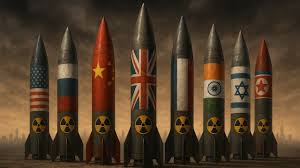
Today, a small number of countries possess nuclear weapons. These are often divided into two categories:
Official Nuclear States (under the Nuclear Non-Proliferation Treaty)
- United States
- Russia
- United Kingdom
- France
- China
Other Nuclear-Armed States
- India
- Pakistan
- North Korea
Israel is widely believed to possess nuclear weapons but has not officially confirmed this.
Together, these countries hold thousands of nuclear warheads, with the majority owned by the United States and Russia.
4. Why Countries Keep Nuclear Weapons
Countries maintain nuclear weapons for several reasons:
Deterrence
The main argument for nuclear weapons is deterrence. The idea is that the fear of devastating retaliation prevents countries from attacking each other. Supporters argue that nuclear weapons have helped prevent large-scale wars between major powers.
National Security and Power
Nuclear weapons are seen by some governments as symbols of strength and global influence. Possessing them can increase a country’s political power on the world stage.
Defense Against Threats
Some countries develop nuclear weapons because they feel threatened by stronger neighbors or rivals and believe nuclear arms are necessary for survival.
5. The Dangers of Nuclear Weapons
Despite arguments for deterrence, nuclear weapons pose serious and ongoing risks.
Humanitarian Impact
A nuclear explosion causes:
- Immediate mass casualties
- Severe burns and injuries
- Long-term radiation sickness
- Genetic damage affecting future generations
Even a limited nuclear war could overwhelm medical systems and cause widespread suffering.
Environmental Damage
Nuclear detonations can destroy ecosystems, contaminate land and water, and make areas uninhabitable for decades. Scientists warn that a large-scale nuclear war could cause nuclear winter, where smoke and debris block sunlight, lowering global temperatures and disrupting agriculture.
Accidents and Miscalculations
History includes several incidents where nuclear war nearly occurred due to:
- False alarms
- Technical errors
- Miscommunication
As long as nuclear weapons exist, the risk of accidental or unintended use remains.
6. Nuclear Proliferation
Nuclear proliferation refers to the spread of nuclear weapons to more countries. This is considered dangerous because:
More nuclear states increase the chance of conflict
Some regions have ongoing tensions
Terrorist groups could seek nuclear materials
Efforts to prevent proliferation are a major focus of international diplomacy.
7. Arms Control and Treaties
To reduce nuclear risks, countries have created agreements to limit and control nuclear weapons.
Nuclear Non-Proliferation Treaty (NPT)
The NPT aims to:
- Prevent the spread of nuclear weapons
- Promote peaceful use of nuclear energy
- Encourage nuclear disarmament
Most countries in the world are members, though some nuclear-armed states are not.
Arms Reduction Treaties
Several agreements between major nuclear powers have reduced the number of deployed weapons over time. These treaties include verification measures to build trust and transparency.
Treaty on the Prohibition of Nuclear Weapons (TPNW)
This treaty seeks to ban nuclear weapons entirely. While supported by many non-nuclear countries, nuclear-armed states have not joined it.
8. Ethical and Moral Questions
Nuclear weapons raise deep moral concerns:
- Is it ethical to possess weapons capable of killing millions?
- Can the threat of mass destruction ever be justified?
- Do nuclear weapons protect peace or threaten humanity’s future?
Many religious leaders, scientists, and activists argue that nuclear weapons are fundamentally immoral and should be eliminated.
9. Nuclear Weapons and Modern Technology
Advances in technology create new challenges:
Cyberattacks could interfere with warning systems
Artificial intelligence may affect military decision-making
Faster weapons reduce decision time during crises
These developments increase the risk of mistakes and raise concerns about human control over nuclear systems.
10. Public Awareness and Activism
Public movements have played a role in nuclear policy:
Anti-nuclear protests during the Cold War
Campaigns for disarmament and test bans
Education efforts by scientists and survivors
Survivors of Hiroshima and Nagasaki, known as hibakusha, have shared their experiences to warn future generations about the horrors of nuclear war.
11. The Future of Nuclear Weapons
The future of nuclear weapons remains uncertain. Possible paths include:
Continued Deterrence
Some countries believe nuclear weapons will remain necessary for security and stability.
Gradual Reduction
Others support continued arms control and reductions to lower risk while maintaining deterrence.
Complete Disarmament
Many activists and nations argue for the total elimination of nuclear weapons, believing this is the only way to guarantee safety.
Achieving a nuclear-free world would require unprecedented international cooperation, trust, and verification.
Conclusion
Nuclear weapons have shaped the world for over seventy years. They represent both the height of scientific achievement and one of humanity’s greatest dangers. While they have influenced global stability through deterrence, they also carry enormous risks—human, environmental, and moral.
As technology advances and global tensions evolve, the challenge of managing nuclear weapons becomes more complex. The choices made by governments, international organizations, and citizens will determine whether nuclear weapons remain a permanent threat or become a part of history.
Understanding nuclear weapons is not just about military power—it is about the future of humanity and the responsibility to protect life on Earth.
World Nuclear Weapons: History, Power, Risks, and the Future
Nuclear weapons are among the most powerful and controversial inventions in human history. Since their first use in World War II, they have shaped international politics, military strategy, global security, and ethical debates. Although nuclear weapons have not been used in war since 1945, their existence continues to influence relations between nations and poses ongoing risks to humanity. Understanding the history, purpose, dangers, and future of nuclear weapons is essential for understanding the modern world.
1. What Are Nuclear Weapons?
Nuclear weapons are explosive devices that release energy through nuclear reactions—either nuclear fission, nuclear fusion, or a combination of both.
- Fission weapons (atomic bombs) split heavy atoms such as uranium or plutonium.
- Fusion weapons (hydrogen bombs) combine light atoms, such as hydrogen isotopes, producing far more powerful explosions.
The energy released by a nuclear weapon is vastly greater than that of conventional explosives. A single nuclear bomb can destroy an entire city, cause massive loss of life, and create long-term environmental damage.
2. Historical Background
The Manhattan Project
Nuclear weapons were first developed during World War II under the Manhattan Project, a secret research program led by the United States with support from the United Kingdom and Canada. Scientists feared that Nazi Germany might develop nuclear weapons first.
In August 1945, the United States dropped two atomic bombs:
- Hiroshima on August 6
- Nagasaki on August 9
These bombings killed hundreds of thousands of people, many instantly and others from radiation-related illnesses. Japan surrendered shortly afterward, ending World War II.
The Cold War Era
After World War II, nuclear weapons became central to the Cold War between the United States and the Soviet Union. Both sides built large nuclear arsenals, leading to an arms race. This period introduced the concept of Mutually Assured Destruction (MAD)—the idea that if one nuclear power launched an attack, the other would respond, resulting in total destruction for both.
Although nuclear war never occurred during the Cold War, several close calls highlighted how dangerous this standoff was.
3. Nuclear-Armed Countries
Today, a small number of countries possess nuclear weapons. These are often divided into two categories:
Official Nuclear States (under the Nuclear Non-Proliferation Treaty)
United States
Russia
United Kingdom
France
China
Other Nuclear-Armed States
India
Pakistan
North Korea
Israel is widely believed to possess nuclear weapons but has not officially confirmed this.
Together, these countries hold thousands of nuclear warheads, with the majority owned by the United States and Russia.
4. Why Countries Keep Nuclear Weapons
Countries maintain nuclear weapons for several reasons:
Deterrence
The main argument for nuclear weapons is deterrence. The idea is that the fear of devastating retaliation prevents countries from attacking each other. Supporters argue that nuclear weapons have helped prevent large-scale wars between major powers.
National Security and Power
Nuclear weapons are seen by some governments as symbols of strength and global influence. Possessing them can increase a country’s political power on the world stage.
Defense Against Threats
Some countries develop nuclear weapons because they feel threatened by stronger neighbors or rivals and believe nuclear arms are necessary for survival.
5. The Dangers of Nuclear Weapons
Despite arguments for deterrence, nuclear weapons pose serious and ongoing risks.
Humanitarian Impact
A nuclear explosion causes:
Immediate mass casualties
Severe burns and injuries
Long-term radiation sickness
Genetic damage affecting future generations
Even a limited nuclear war could overwhelm medical systems and cause widespread suffering.
Environmental Damage
Nuclear detonations can destroy ecosystems, contaminate land and water, and make areas uninhabitable for decades. Scientists warn that a large-scale nuclear war could cause nuclear winter, where smoke and debris block sunlight, lowering global temperatures and disrupting agriculture.
Accidents and Miscalculations
History includes several incidents where nuclear war nearly occurred due to:
- False alarms
- Technical errors
- Miscommunication
As long as nuclear weapons exist, the risk of accidental or unintended use remains.
6. Nuclear Proliferation
Nuclear proliferation refers to the spread of nuclear weapons to more countries. This is considered dangerous because:
- More nuclear states increase the chance of conflict
- Some regions have ongoing tensions
- Terrorist groups could seek nuclear materials
Efforts to prevent proliferation are a major focus of international diplomacy.
7. Arms Control and Treaties
To reduce nuclear risks, countries have created agreements to limit and control nuclear weapons.
Nuclear Non-Proliferation Treaty (NPT)
The NPT aims to:
- Prevent the spread of nuclear weapons
- Promote peaceful use of nuclear energy
- Encourage nuclear disarmament
Most countries in the world are members, though some nuclear-armed states are not.
Arms Reduction Treaties
Several agreements between major nuclear powers have reduced the number of deployed weapons over time. These treaties include verification measures to build trust and transparency.
Treaty on the Prohibition of Nuclear Weapons (TPNW)
This treaty seeks to ban nuclear weapons entirely. While supported by many non-nuclear countries, nuclear-armed states have not joined it.
8. Ethical and Moral Questions
Nuclear weapons raise deep moral concerns:
- Is it ethical to possess weapons capable of killing millions?
- Can the threat of mass destruction ever be justified?
- Do nuclear weapons protect peace or threaten humanity’s future?
Many religious leaders, scientists, and activists argue that nuclear weapons are fundamentally immoral and should be eliminated.
9. Nuclear Weapons and Modern Technology
Advances in technology create new challenges:
Cyberattacks could interfere with warning systems
Artificial intelligence may affect military decision-making
Faster weapons reduce decision time during crises
These developments increase the risk of mistakes and raise concerns about human control over nuclear systems.
10. Public Awareness and Activism
Public movements have played a role in nuclear policy:
Anti-nuclear protests during the Cold War
Campaigns for disarmament and test bans
Education efforts by scientists and survivors
Survivors of Hiroshima and Nagasaki, known as hibakusha, have shared their experiences to warn future generations about the horrors of nuclear war.
11. The Future of Nuclear Weapons
The future of nuclear weapons remains uncertain. Possible paths include:
Continued Deterrence
Some countries believe nuclear weapons will remain necessary for security and stability.
Gradual Reduction
Others support continued arms control and reductions to lower risk while maintaining deterrence.
Complete Disarmament
Many activists and nations argue for the total elimination of nuclear weapons, believing this is the only way to guarantee safety.
Achieving a nuclear-free world would require unprecedented international cooperation, trust, and verification.
Conclusion
Nuclear weapons have shaped the world for over seventy years. They represent both the height of scientific achievement and one of humanity’s greatest dangers. While they have influenced global stability through deterrence, they also carry enormous risks—human, environmental, and moral.
As technology advances and global tensions evolve, the challenge of managing nuclear weapons becomes more complex. The choices made by governments, international organizations, and citizens will determine whether nuclear weapons remain a permanent threat or become a part of history.
Understanding nuclear weapons is not just about military power—it is about the future of humanity and the responsibility to protect life on Earth.












Leave a Reply